
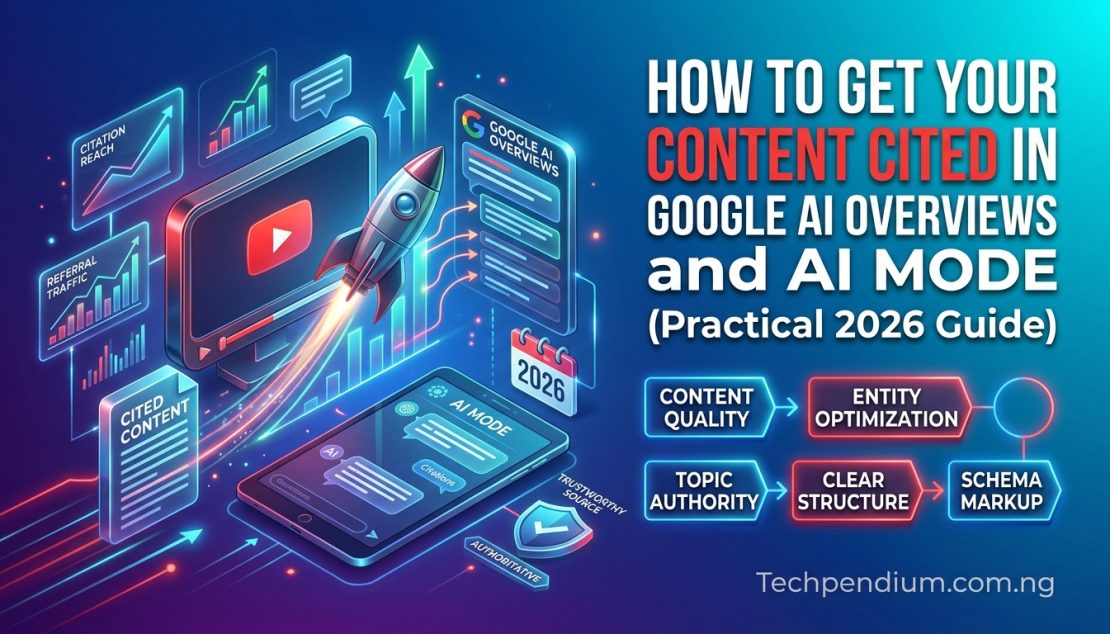

You publish solid content and it ranks on page one, yet when someone asks Google a related question, the AI Overview at the top never mentions you. The summary pulls from other sites while your own page sits unused below.
- You publish solid content and it ranks on page one, yet when someone asks Google a related question, the AI...
- The summary pulls from other sites while your own page sits unused below.
- Use clear, extractable structure Break content into short sections with descriptive headings that match real questions.
- Update page whenever fees or portal interface change.
Keep reading for the full breakdown on AEO guide — everything you need to know is covered below.
That gap is very common in 2026. Google AI Overviews and AI Mode now answer many queries directly. They select passages that are clear, self-contained and easy to trust. Ranking alone no longer guarantees citation.
This guide shows what actually gets selected right now and practical steps that improve your chances.
What are Google AI Overviews and AI Mode?
Google AI Overviews and AI Mode cite content that delivers direct, self-contained answer near top of page, uses clear structure, maintains consistent entity information, stays fresh, and includes original data or specific local detail. Technical signals like FAQ and HowTo schema help extraction, but quality and clarity of passage itself matter most.
What Actually Gets Cited Right Now
AI Overviews and AI Mode do not simply lift highest-ranking page. They look for passages that can stand alone as useful answer. System favours:
- Concise definition or direct response in first 40 to 60 words after clear heading
- Structured formats like numbered steps, short lists or comparison tables
- Consistent brand and entity facts that match information found elsewhere on web,
- Recent updates or original statistics that add information not widely repeated.
- Content that shows first-hand experience or local knowledge
Pages that open with long introductions, bury answer, or use vague language are routinely skipped even when they rank well.
Step-by-Step: How to Make Your Content Citation-Ready
1. Write answer-first
Place complete, usable answer immediately after main heading or in opening paragraph. Aim for 40 to 60 words that could be lifted without needing rest of page. Expand only after that core answer is delivered.
Example for service page:
“CAC business name reservation in Nigeria costs ₦500 for a limited company search and usually takes 24 to 48 hours online through Company Registration Portal. You need proposed name, nature of business and valid means of identification to start.”
2. Use clear, extractable structure
Break content into short sections with descriptive headings that match real questions. Follow each heading with direct paragraph before any background. Numbered lists and simple tables perform well because they are easy for system to parse.
3. Strengthen entity consistency
Use same official name, location and core description of your business or topic across website, Google Business Profile, directories and any profiles. Inconsistent names or addresses reduce trust signals that AI systems rely on when choosing sources.
4. Keep content fresh and add original value
Update key pages when fees, processes or regulations change. Include specific figures, timelines or observations that are not copied from other sites. Original data, even small local surveys or process timings, gives system reason to prefer your passage.
5. Demonstrate experience where possible
Mention practical details that only someone doing the work would know: typical delays, common rejection reasons, or exact documents currently required. These details help satisfy Google emphasis on experience and expertise.
Schema and Technical Signals That Still Help
Structured data does not guarantee citation, but it makes extraction cleaner.
Useful types for AI Overviews and AI Mode:
- FAQPage schema for question-and-answer blocks.
- HowTo schema for step-by-step processes.
- Article or BlogPosting with clear author and date information.
- Organization or LocalBusiness schema with consistent NAP details
Ensure pages load quickly, are mobile-friendly and can be crawled without barriers. Blocked or heavily JavaScript-dependent content is harder for systems to use reliably.
Nigerian Examples That Work
Local business and service pages benefit strongly from precise, current detail.
Business registration page: Open with exact current steps and fees for CAC registration. Include online portal name, typical processing time, and documents required for limited liability company. Add short note on common name rejection reasons. Update page whenever fees or portal interface change.
Tax or compliance service page: State current filing deadlines, portal used (for example FIRS platform), and practical sequence small business follows. Mention realistic timelines observed in Lagos or Abuja rather than generic advice.
Professional service page (legal, accounting, consulting): Lead with clear description of who service is for and typical outcome or timeline. Follow with short list of what clients need to prepare. Keep location and contact details identical to your Google Business Profile.
These pages succeed when first paragraph answers query and rest supports it with verifiable local detail.
Common Mistakes That Keep Content Invisible
- Opening with 200 words of background before any direct answer.
- Using different versions of business name or address across site and profiles.
- Leaving outdated fees, deadlines or process steps on page.
- Publishing thin content that simply rephrases what already appears on many other sites.
- Hiding key information inside images or PDFs that systems cannot easily read.
- Ignoring mobile layout so answer is hard to extract on devices most users prefer
Expert Tips
- Test exact questions your customers ask. Enter them in Google and note which sources appear in AI Overview. Compare those passages with your own. Differences are usually clarity, specificity and structure.
- Create simple internal standard: every important page must deliver usable answer in first screen of content. Review existing pages against that standard.
- Track small set of priority queries monthly. Record whether you appear, how you are described, and which competitors are cited. Patterns emerge quickly.
- When you update page, change visible date and, where relevant, note what was revised. Freshness signals help.
Frequently Asked Questions
Does ranking on page one guarantee AI Overview citation?
No. Many high-ranking pages are skipped if their content is not easy to extract as clean answer.
How important is schema markup?
It helps systems understand structure of your content, especially FAQs and how-to steps. It is supporting, not decisive.
Should I rewrite every page on my site?
Start with pages that target your highest-value questions. Those deliver fastest practical return.
Can small Nigerian sites compete with large international publishers?
Yes, on local and process-specific queries. Accurate, current detail about Nigerian systems often outperforms generic global content.
How often should I update content for AI Overviews?
Update whenever facts change – fees, deadlines, portal names, required documents. For stable topics, periodic review every few months is usually enough.
Does original research help?
Yes. Even modest original observations or local data give system something unique to cite.
Will AI Mode cite same sources as AI Overviews?
There is significant overlap, but AI Mode conversational nature sometimes surfaces additional supporting pages. Clear, structured content helps in both.
Is it worth adding author bios and credentials?
Yes. Visible expertise and experience signals support overall trust assessment Google applies.
Can I force citation by using certain phrases?
No. Forced or keyword-stuffed language usually hurts more than it helps. Clarity and usefulness remain stronger factors.
What is single highest-leverage change most sites can make?
Rewrite opening of key pages so complete answer appears in first 40 to 60 words.
Leave a Reply